AI analysisUses public information; see the source list at the end
Not all land in Dubai is open to foreigners. Which right a foreign buyer can obtain depends on the area where the plot lies and the type of right registered; once purchased, the right is defined by DLD's registration and certificate. This article covers only the Emirate of Dubai; Abu Dhabi and the other emirates have their own rules.
1. Which rights foreigners can hold
Regulation No. 3 of 2006 sets out the areas where non-UAE nationals can acquire real estate rights in Dubai. On the listed plots, foreigners can acquire one of the following two types of right:
- Freehold: described in the regulation as ownership without any time limit.
- Leasehold: a long-term lease of up to 99 years.
For certain plots the regulation allows only usufruct or a lease of up to 99 years. Leasehold and usufruct are optional forms of right listed in the regulation, not a mandatory form for particular areas. DLD's FAQ page divides property ownership in Dubai into two categories: ownership by UAE or GCC citizens in all areas, and ownership by foreigners in freehold areas. Which type a particular unit actually has depends on its registration details.
2. Where the freehold areas are: the list changes
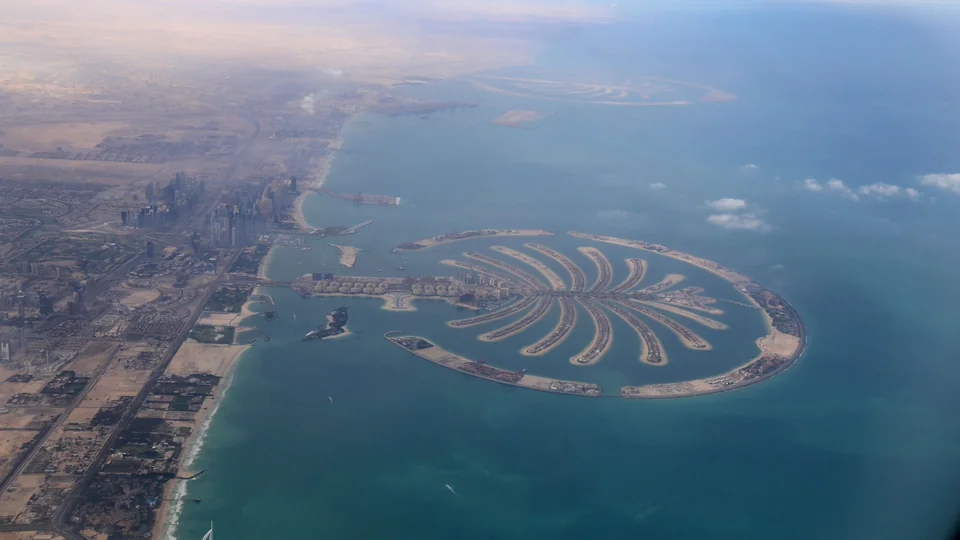
The regulation's annex lists plot numbers by community - for example, some plots in Dubai Marina, Palm Jumeirah, Jebel Ali and Emirates Hills - and states that the maps issued by the competent authority govern. The annex is only a starting point. In January 2025, DLD announced that private owners on a stretch of Sheikh Zayed Road and in Al Jaddaf could convert their ownership to freehold open to all nationalities, covering 457 plots in total: 128 on Sheikh Zayed Road and 329 in Al Jaddaf. The conversion fee is 30% of the valuation and is paid by the owner applying to convert, not by the buyer.
Owners can check whether they qualify for conversion in the Dubai REST app. No single official DLD page listing all freehold areas could be located. Community lists circulating in the market are mostly compiled by agents and are for reference only; whether a given plot is in a freehold area is determined by DLD maps and lookups in the Dubai REST app.
3. The certificate you receive: how to verify it
The Title Deed is the ownership registration document issued by DLD. After a ready property transfer is completed, the buyer receives the title deed; before handover, an off-plan property goes through interim registration instead - see "Off-plan vs Ready: Payment Plans, Handover Risk and Yield".
- DLD offers a title deed verification service, available instantly on the DLD website or in the Dubai REST app.
- Electronic title deeds carry a QR code and can be viewed under property services after logging in to Dubai REST.
- Dubai REST also shows information such as a project's completion percentage, its escrow account number and the owner's payments due.
Verification confirms that the certificate itself is valid. The type of right, the area and the registered owner should all be checked item by item against the sale contract.
4. Can you buy without living in Dubai?
DLD's resale registration accepts an Emirates ID or a valid passport; for the first registration of an off-plan sale, non-residents submit a copy of a valid passport among the individual documents. Neither service page requires a residence visa or a local bank account. A local account is mainly needed when applying for a local mortgage, which the bank assesses under its own rules.
One agency's buying guide notes that many buyers assume they need a residence visa, a local bank account and to sign in person in Dubai, when in fact non-residents can complete identity verification with a valid passport under the DLD process; the usual sequence is signing the sale agreement and paying a deposit, obtaining the developer's No Objection Certificate, completing the transfer at a trustee office, and receiving the certificate.
Buying remotely usually requires an attested power of attorney; the specific official requirements have not been verified for this article. Cross-border transfers, source-of-funds checks and anti-money-laundering reviews are carried out by trustees and banks and should be confirmed item by item with a licensed broker or lawyer. Residency and buying property are separate matters; for the thresholds, see "Property and the Golden Visa: Thresholds, Conditions and Misconceptions".
5. What to check first when looking at ads and listings
- Property ads must obtain a permit through the Trakheesi system and display the permit number; since 24 April 2023, ads must also carry a Madmoun QR code, which can be scanned to check whether the ad is approved and whether the property has already been sold or let.
- The demo listings on this site are all fictional data, not licensed real ads, and have no Madmoun QR code.
- Once you have a real listing, check the type of right, the plot and the title deed first, and only then discuss price and yield.